
What Is Proactive Customer Service and Why Does It Build More Loyal Customers

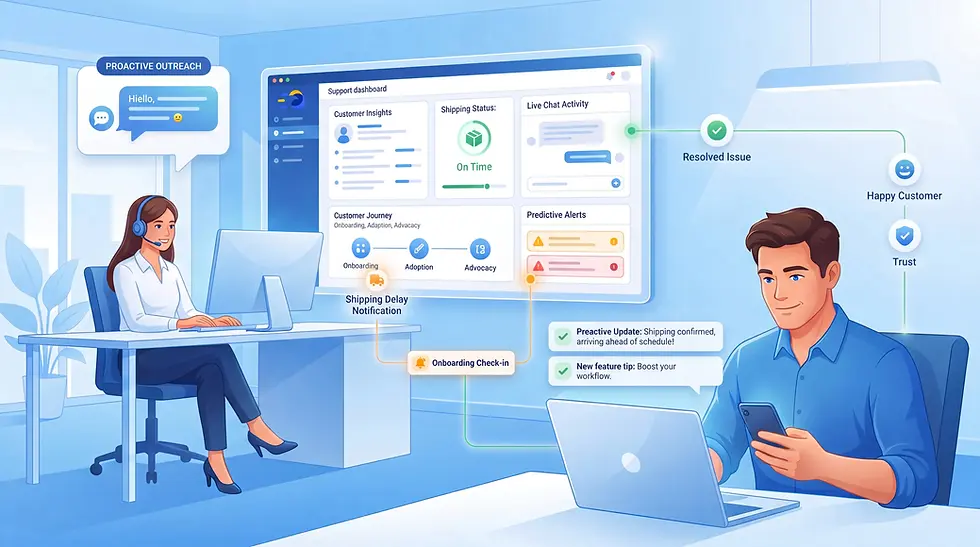
Most businesses are set up to respond. A customer sends a message. You reply. A complaint comes in. You fix it. This is how customer service has worked for a long time.
But there is a better way.
Proactive customer service flips the model around. Instead of waiting for customers to bring you problems, you spot those problems first and deal with them before anyone has to ask.
It sounds simple. And in many ways it is. But most businesses haven't made the shift. This guide explains what proactive customer service is, why it builds stronger relationships than reactive support, and how you can start doing it today.
What Proactive Customer Service Actually Means
Proactive customer service means anticipating what a customer needs and addressing it before they have to reach out.
Think of it this way. A reactive team waits for someone to call and say "my order hasn't arrived." A proactive team spots the shipping delay and sends a heads-up message before the customer even notices.
Same problem. Completely different experience.
The goal isn't to contact customers constantly. It's to reach out at the right moment, with the right information, before frustration builds. When you do it well, customers feel looked after. Not bothered.
Proactive vs Reactive Customer Service

Both have a place in a good support strategy. But understanding the difference helps you know which approach fits each situation.
Reactive customer service means responding after the customer contacts you. They experienced a problem, reached out, and now you're solving it. This is necessary, but it starts from a place of frustration. The customer already had a bad moment before you entered the picture.
Proactive customer service means you make the first move. You notice something, send a message, offer help, or resolve an issue before it becomes a complaint.
A reactive approach asks: "How can I help you?" A proactive approach says: "I noticed this might be an issue. Here's what we've already done about it."
Neither is wrong. The strongest support teams do both. But proactive service is where real customer loyalty is built.
Why Proactive Service Matters More Than You Think
Here's something worth considering. Most complaints are about things businesses already knew. Shipping delays. Website bugs. Policy changes. Out-of-stock items. These aren't surprises on the company's end. They're gaps where someone chose to stay silent and wait.
Customers notice when a company reaches out before they had to ask. It signals that you're paying attention, that you care about their experience, and that you can be trusted.
That trust is difficult to rebuild once it's been lost.
According to Salesforce research, 61% of service professionals believe their companies address issues proactively. But only a third of customers agree. That gap is exactly where better customer experiences are waiting to be built.
The Real Benefits of Being Proactive
Here's what actually changes when you shift from reactive to proactive.
Fewer support tickets come in. When you communicate proactively, you remove the need for customers to contact you with frustration. Fewer incoming tickets means your team has more time to handle the complex issues that genuinely need attention.
Customer loyalty goes up. Customers who feel cared for do not leave. Proactive service creates the kind of experience that people remember and tell others about.
Your team gets less burned out. Constant firefighting takes a toll. A proactive support approach reduces the volume of urgent problems and gives your team breathing room.
It costs less to run. Resolving a small issue early costs far less than handling an escalated complaint, a refund, or a public negative review.
Your reputation improves. Satisfied customers share their experiences. This brings in new business and strengthens the relationships you already have.
To understand the bigger picture of how customer support fits together, this article on how customer support works is a helpful read.
8 Practical Ways to Deliver Proactive Customer Service
These aren't theoretical ideas. Here's how proactive service looks in practice, and how you can put each one into action.

1. Send Order and Shipping Updates Without Being Asked
If someone has made a purchase, they want to know where their item is. Don't wait for them to follow up. Send updates when their order is confirmed, when it ships, when it's out for delivery, and when it arrives.
This is one of the easiest proactive habits to build and one of the most appreciated. It removes anxiety from the buying experience and shows customers you're thinking ahead.
2. Set Up Live Chat Triggers
A triggered chat message opens automatically based on how a visitor behaves on your site. Someone spends a few minutes on your pricing page without converting?
That's a good moment to offer help. A visitor gets stuck on the checkout page? Send a short message.
Live chat triggers let you reach customers at the exact moment they might have a question, without waiting for them to click "contact us." This is proactive service happening in real time.
Tools like Falkon Chat make it easy to set these up and reach website visitors before they leave with unanswered questions.
3. Reach Out When Something Goes Wrong
If your service has a known issue, an outage, or a delay, tell your customers before they discover it themselves. A short, clear message is all it takes. Something like:
"We're aware of a current issue with our platform. Our team is working on it and we expect it to be resolved by [time]. Thank you for your patience."
This kind of message turns a potential complaint into a moment of trust. It takes a few minutes to send and saves hours of reactive support.
4. Build a Knowledge Base
Many customer questions are the same questions asked over and over. A well-structured knowledge base gives customers the answers they need before they have to ask.
When someone searches "how do I update my billing information" and finds a clear answer on your site, that's proactive service working in the background. It's available 24 hours a day and requires no agent time.
5. Follow Up After Purchase or Onboarding
A short check-in message after someone signs up or buys from you does two things.
It reassures the customer that they made a good decision. And it opens a door for them to raise questions early, before small frustrations turn into bigger ones.
Something like: "You've been with us for a week now. Is there anything we can help you make the most of?" This kind of message feels personal and thoughtful without being pushy.
6. Collect Feedback Regularly
Waiting until a customer churns or leaves a negative review is too late to act. Regular feedback gives you a signal while you still have time to respond.
Send a short survey after a support interaction. Track your live chat metrics like satisfaction scores and first reply times. Notice patterns before they become bigger problems.
A good feedback loop doesn't just collect responses. It acts on them and tells customers what changed because of what they said.
7. Map and Review Your Customer Touchpoints
Your website, emails, checkout pages, onboarding flows, and support channels are all touchpoints. Regularly walk through each one from a customer's perspective and ask yourself: where could someone get stuck, confused, or frustrated?
This kind of regular audit helps you find friction before customers report it. This guide on customer touchpoints for lasting relationships is a great place to start thinking about where your experience has gaps.
8. Give Your Team the Context They Need
When your support team can see a customer's purchase history, previous conversations, and current situation in one place, they can address problems before they escalate. They can spot patterns. They can reach out before the customer has to.
Equipping your team with ready-to-use live chat scripts for common scenarios also helps them respond faster and more consistently, which is a key part of proactive support.
Common Mistakes That Undermine Proactive Service
Proactive outreach can backfire if it's done poorly. Here are the mistakes that turn good intentions into customer annoyance.
Contacting customers too often. There is a clear line between helpful and intrusive. If you message customers too frequently or without clear value, it starts to feel like spam. Every proactive touchpoint should have a specific purpose.
Being vague. "We're working to improve your experience" is not helpful information. Be specific. Tell customers what happened, what you're doing about it, and when it will be resolved.
Failing to follow through. A proactive message only works if the issue actually gets fixed. Sending a heads-up about a problem and then not resolving it is worse than saying nothing.
Focusing only on new customers. Long-term customers are often the ones who quietly drift away. Make sure your proactive habits apply to all customers, not just those who just signed up.
You can find more on this in our roundup of common live chat mistakes to avoid when building your support process.
How to Start Even If You Have a Small Team
You don't need a large support team or complex software to be proactive. You need to start asking a different question.
Instead of asking "how do we handle this complaint," ask "why does this complaint happen, and how do we prevent it?"
Pick one area where customers frequently contact you about the same thing.
Understand why. Then find a way to share that information before they have to ask.
Maybe it's a shipping update. Maybe it's a renewal reminder. Maybe it's a simple onboarding email with answers to the questions you hear every week.
Start with one. Do it consistently. Measure whether that type of inquiry decreases. Once you have one proactive habit working, build from there.
For teams using live chat, the live chat best practices guide covers practical ways to build a more proactive, efficient support channel.
The Role of Live Chat in Proactive Customer Service
Live chat is one of the most effective tools for proactive service because it puts you in front of customers in real time, on your website, at the exact moment they might need help.
Unlike email, live chat is immediate. And with the right setup, you can automate the first message so visitors feel helped the moment they arrive rather than after they've already given up.
Using live chat welcome messages is one of the simplest ways to make your support feel proactive. You can greet every visitor, invite questions on specific pages, or offer help to anyone who seems stuck.
Live chat also gives you data. You can see which pages cause the most confusion, where visitors drop off, and how long it takes to resolve common issues. These signals help you improve your experience proactively and show you where to invest your support efforts next.
To learn more about what live chat can do for your support setup, this overview of the benefits of website live chat is worth reading.
Frequently Asked Questions
What is the difference between proactive and reactive customer service?
Reactive service responds after a customer contacts you with a problem. Proactive service anticipates needs and addresses them before the customer has to reach out. The key difference is who makes the first move.
What are real examples of proactive customer service?
Sending shipping updates before a customer asks. Messaging customers about a service outage before complaints come in. Opening a chat window when a visitor lingers on a checkout page. Following up after onboarding to check in. Sending a reminder before a subscription renews.
Is proactive customer service only for large companies?
No. Small businesses can be proactive with simple email sequences, automated chat triggers, and a basic help center. The mindset shift matters more than the size of your team or your technology budget.
How does live chat support proactive customer service?
Live chat lets you set up automated triggers based on what visitors do on your site. You can reach out at the right moment without waiting for the customer to ask for help. It is one of the most direct channels for proactive real-time outreach.
How do I know if my proactive service is working?
Track support ticket volume by issue type. If you start sending proactive shipping updates and shipping-related inquiries drop, that's a clear signal. Customer satisfaction scores and live chat metrics like first reply time and CSAT are also good indicators.
Can proactive service feel pushy?
Yes, if done without care. The key is to offer genuine value, not just more contact. Reach out when you have something useful to say. Keep messages short and clear. Always make it easy for the customer to respond or ignore the message without pressure.
What tools do I need to start being proactive?
You don't need much to start. An email tool for follow-up sequences, a live chat solution for real-time outreach, and a simple knowledge base cover most of the basics. From there, you build on what you learn from customer behavior.
Ready to Make Your Customer Service More Proactive?
Proactive customer service doesn't require a complete overhaul. It requires a shift in how you think about support: from waiting and responding to watching and reaching out.
Start with one channel. Automate one message. Ask one follow-up question after every purchase. The small habits add up quickly.
If you want to start delivering proactive support through live chat on your website, Falkon Chat is built for teams that want to reach customers at the right moment without the complexity of large enterprise platforms. Set up triggers, send welcome messages, and track what's working, all from one simple dashboard.


Comments